
Why a Professional Website Should Never Cost Next to Nothing — Is It Okay To Sell Websites for 5000 TL?
The real value of website development, the hidden work behind a successful website, and why choosing the cheapest offer can become an expensive mistake.
Let’s talk about something that has become increasingly common in the web design market in Türkiye: websites for 2,500 or 5,000 TRY.
At first glance, these offers sound incredibly attractive. Why spend more when someone promises to build you a complete website for a fraction of the price?
But here’s the question: What exactly are you paying for?

The web design market has become highly competitive. With ready-made WordPress themes, website builders, AI tools, and countless freelancers offering extremely low prices, businesses are increasingly exposed to offers that promise a fully functional website in just a few days.
And while affordable solutions certainly have their place, we need to distinguish between installing a website template and developing a professional digital presence for a business.
Because these are two very different things.

1. A Ready-Made Template Is Not the Same as a Custom Website
Let’s start with WordPress.
WordPress is an excellent content management system that allows developers to build everything from simple business websites to complex digital platforms. However, the fact that a website runs on WordPress doesn’t tell you much about the actual development process.
One approach is relatively simple: purchase a ready-made theme, install it, replace the demo images and text, adjust a few colors, and publish the website.
There is absolutely nothing wrong with using a pre-built theme. For some small businesses, this can be a perfectly reasonable starting point.
But let’s be honest about what it is.

It’s a template-based website with limited customization, not necessarily a solution developed around your business.
A professionally developed website requires much more:
- Understanding your business, services, and target audience.
- Researching competitors and analyzing the market.
- Developing a logical website structure and user journey.
- Creating a design that reflects your brand identity.
- Customizing layouts and functionality to meet your requirements.
- Preparing and organizing website content.
- Implementing basic and technical SEO.
- Optimizing loading speed and mobile responsiveness.
- Testing functionality, usability, and compatibility across devices.
And all of this takes time, knowledge, and experience.

2. What Actually Happens Behind the Scenes?
One of the biggest misconceptions about website development is that people only pay for the visible result. They see a homepage, a few service pages, some images, and a contact form.
What they don’t see is the work that happens before, during, and after the design process. A professional website starts long before anyone opens WordPress.

Research and strategy
Before designing anything, we need to understand what the business does, who its customers are, what makes it different, and how competitors position themselves.
Website architecture
The website needs a logical structure. Visitors should be able to find information easily, understand the company’s offer, and know what action to take next.
Design and user experience
A website should reflect the company’s identity while remaining intuitive and convenient. Good design isn’t simply about making things look attractive. It’s about making information accessible and guiding visitors towards meaningful actions.

Content development
Text is not just something you add to fill empty spaces. Website content communicates value, answers questions, builds trust, and helps search engines understand what your business offers.
SEO optimization
A website should be built with search visibility in mind. This includes page titles, meta descriptions, heading structure, URLs, internal linking, image optimization, indexing settings, and technical SEO foundations.
Technical implementation and testing
Responsive layouts, performance, security, forms, integrations, browser compatibility, and functionality all need attention.
Every one of these stages requires human working hours. And those hours have a cost.

3. Why Extremely Low Prices Should Make You Ask Questions
Imagine a freelancer or agency offering to create a complete business website for 5,000 TRY.
Let’s consider the actual workload. Even a relatively small corporate website may require:
- Several hours of research and planning.
- Time spent on design and customization.
- Content preparation and editing.
- WordPress configuration and development.
- SEO setup and optimization.
- Mobile adaptation.
- Testing and revisions.
- Communication with the client.
Depending on the project, this can easily amount to dozens of working hours.
Now consider the mathematics.

If a project requires 40 hours of work and costs 5,000 TRY, that’s just 125 TRY per hour before taxes, software subscriptions, business expenses, and other costs.
Something has to give.
Perhaps the developer is using a completely ready-made solution. Perhaps there is no market research, no original content, no meaningful SEO work, or no proper testing. Perhaps the client receives a basic installation with very limited support.
Or perhaps the developer is simply working at an unsustainable rate.
The point is not that every inexpensive website is bad.
The point is that a very low price should always come with a clear explanation of what is included and, more importantly, what is not included.
If someone promises a fully customized, SEO-ready, professionally designed website with original content, research, optimization, and ongoing support for an exceptionally small fee, it’s reasonable to question how that work can realistically be delivered.
4. How Much Should a Professional WordPress Website Actually Cost?
There is no universal price for website development.
The final cost depends on the number of pages, complexity, design requirements, content, integrations, functionality, and the level of customization.
However, looking at publicly available 2026 pricing guides for the Turkish market, we can establish some approximate benchmarks.
Here is a general breakdown:
| Website type | Approximate price |
|---|---|
| Basic template installation | 5,000–15,000 TRY |
| Small business website | 15,000–30,000 TRY |
| Professional corporate website | 20,000–60,000 TRY |
| Custom-designed corporate website | 45,000–120,000 TRY |
| Complex website with integrations | 60,000 TRY and above |
| E-commerce website | Depends on functionality and complexity |
These figures are indicative market ranges, not fixed industry prices. International markets and individual project requirements can differ considerably.

A business website with five pages and basic functionality is naturally different from a multilingual corporate platform with custom integrations, advanced SEO, and extensive content.
But here’s what matters: if you’re looking for a professionally developed business website rather than a basic online placeholder, you should budget accordingly.
5. Expensive Doesn’t Automatically Mean Better
Now, let’s make one thing clear. We are not saying that the most expensive agency is always the best choice. A high price tag doesn’t guarantee excellent design, clean development, good SEO, or business results.
There are agencies that charge premium rates without delivering corresponding value. And there are talented independent developers who provide excellent work at reasonable prices.
The important thing is transparency.
Before choosing a developer, ask:
- Is the design customized for my business?
- Will you research my industry and competitors?
- Who is responsible for writing the website content?
- Is SEO included, and what exactly does that cover?
- Will the website be optimized for mobile devices?
- Will loading speed and technical performance be tested?
- Will I have full access to my website and its administration?
- What happens after the website goes live?
- Are future updates and maintenance included?
A professional provider should be able to explain the entire process and clearly define the deliverables.
You should know what you’re paying for.
6. Your Website Is an Investment, Not Just Another Expense
Think about your website as your digital business representative. It works when you’re sleeping, when you’re meeting clients, and when someone discovers your company through Google for the first time.
It can introduce your services, communicate your expertise, answer frequently asked questions, generate leads, and support your sales process. But it can only do these things effectively if it’s built with a purpose.
A visually attractive website that loads slowly, has confusing navigation, contains poorly written content, and cannot be found through search engines is unlikely to deliver much value.
The goal should not simply be to get a website online. The goal should be to build a digital platform that supports your business objectives.
And that requires more than installing a theme and changing a logo.
7. How We Approach Website Development at VAGO Design
At VAGO Design, we believe that every business deserves a website developed with its individual goals, audience, and market position in mind.
Our approach goes beyond visual design.
We start by understanding the business, researching the industry, analyzing competitors, and identifying what the website needs to achieve.
From there, we work on the structure, visual identity, content, user experience, technical implementation, and SEO foundations.
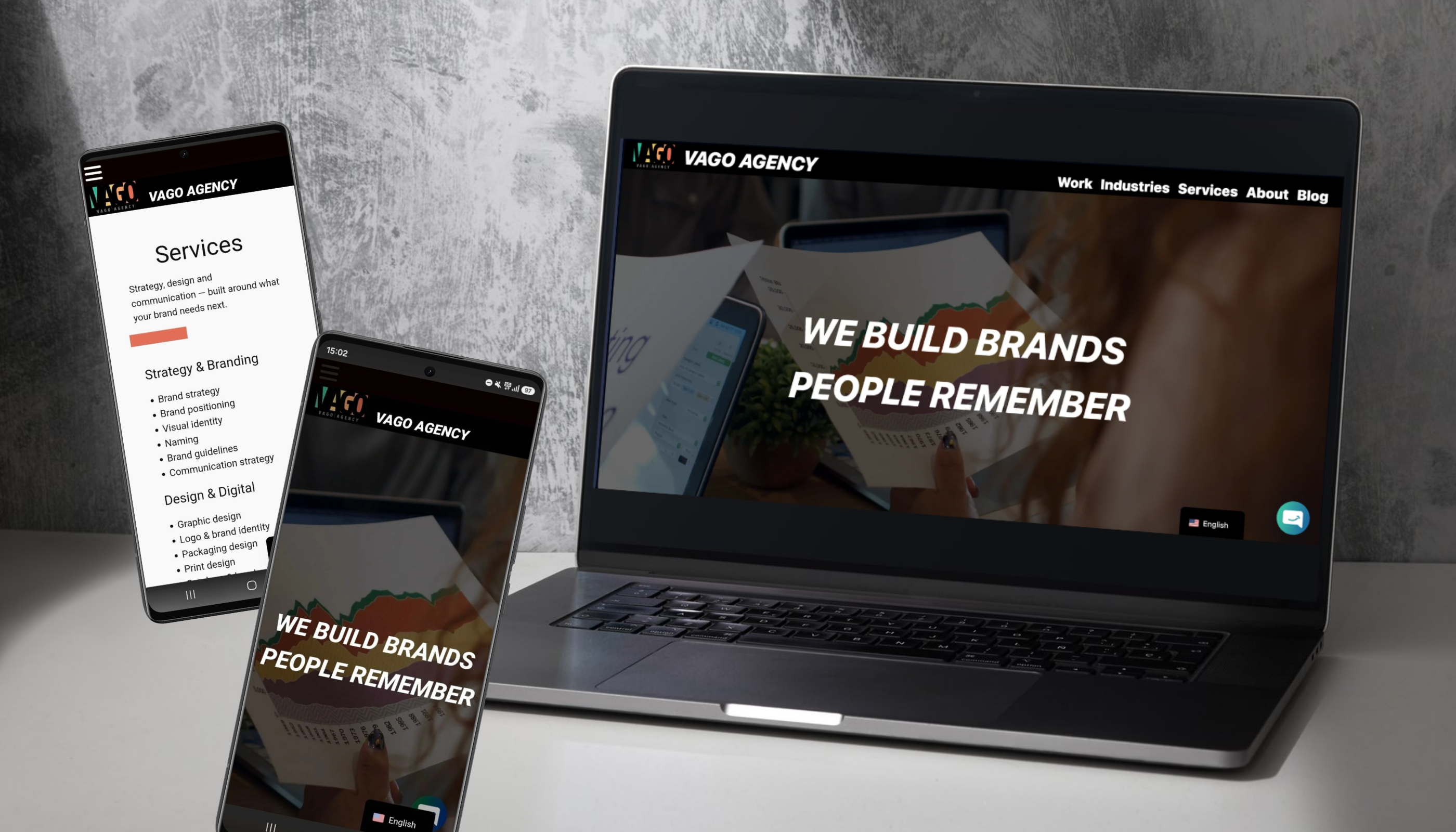
We use WordPress because it offers flexibility, scalability, and convenient content management. But the platform itself is only a tool. What matters is how it’s used.
We don’t believe in creating websites simply to say that a project is finished.
We believe in creating websites that represent a brand professionally, provide a positive user experience, and establish a solid foundation for online growth.
Because a website should work for your business, not just exist on the internet.
Don’t Just Ask How Much a Website Costs. Ask What You’re Getting
Choosing the cheapest offer might save you money today, but it can also mean paying someone else to rebuild, redesign, optimize, or fix the website tomorrow.
And choosing the most expensive option without understanding the scope isn’t necessarily a smart investment either.

Look at the process. Ask questions. Compare deliverables, not just numbers.
A professional website requires strategy, creativity, technical knowledge, and a significant investment of time. That value should be reflected in its price.
Looking for a WordPress website in Türkiye that does more than simply look good?
Let’s talk about your project.
VAGO Design — Thoughtful Design. Strategic Digital Solutions.
Leave a Reply